
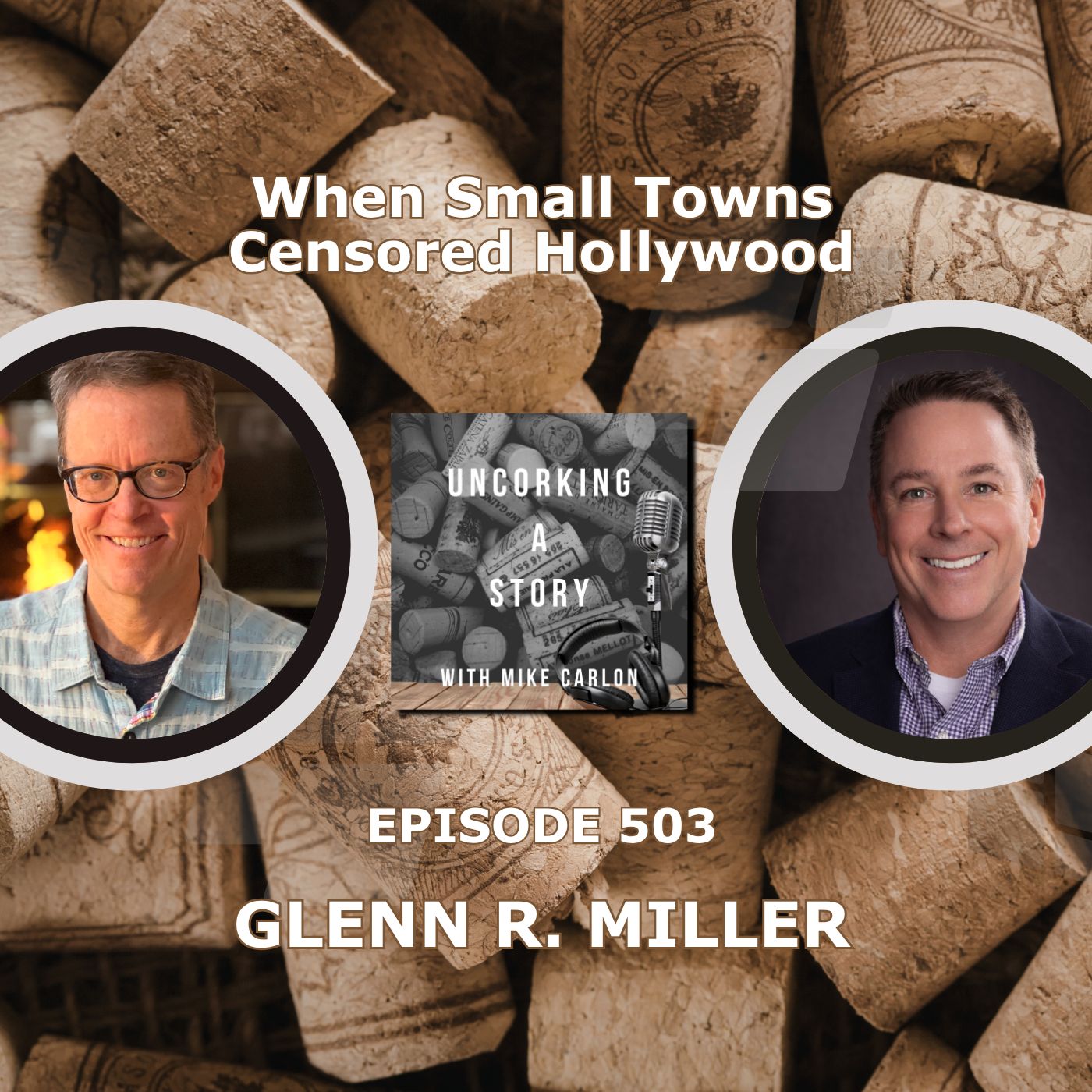
When Small Towns Censored Hollywood, with Glenn R. Miller
Glenn R. Miller started out as a unit manager on NBC soap operas and game shows. He went on to journalism, public television and decades of agency work, and he finally took a swing at fiction with his award-winning comic novel Doorman Wanted. His new novel, Rough Cuts, grew out of a conversation with his mother-in-law, who had found boxes of note cards in her grandfather's files. Her grandfather was a small-town Ohio minister who had served on the state's film censorship board in the 1920s, and the cards ordered Hollywood studios to cut their films. Glenn and Mike talk about how a minister in Marietta could overrule a Hollywood director, why censors started writing their own lines, and how much of that era's comedy was lost. They also discuss why satirizing the 1920s turned out to be as hard as satirizing today, and why censorship is never as simple as it looks.
Share the goodness!
“These people from small towns across the country had the power to go up against Hollywood directors and Hollywood producers, demanding that changes be made to those films.”
— Glenn R. Miller
ABOUT THIS EPISODE
Glenn R. Miller started out as a unit manager on NBC soap operas and game shows. He went on to journalism, public television and decades of agency work, and he finally took a swing at fiction with his award-winning comic novel Doorman Wanted. His new novel, Rough Cuts, grew out of a conversation with his mother-in-law, who had found boxes of note cards in her grandfather’s files. Her grandfather was a small-town Ohio minister who had served on the state’s film censorship board in the 1920s, and the cards ordered Hollywood studios to cut their films. Glenn and Mike talk about how a minister in Marietta could overrule a Hollywood director, why censors started writing their own lines, and how much of that era’s comedy was lost. They also discuss why satirizing the 1920s turned out to be as hard as satirizing today, and why censorship is never as simple as it looks.
KEY TAKEAWAYS
1. Great stories can be hiding in a family’s file boxes. Rough Cuts began with a mother-in-law’s offhand discovery of note cards detailing cuts demanded of Hollywood films. Glenn spent a week in the Marietta College archives sorting those cards by what offended the censors: sex, violence, disrespect for authority, and drinking that went unpunished.
2. Small-town censors held real power over Hollywood. Eight states had censorship boards that could force changes before a film was shown, and neighboring states often followed their lead. That gave local appointees, usually with no film background, leverage over major directors and producers.
3. Censorship was also a business. Studios paid state boards to review their films and then paid again for every foot of film the boards cut. Glenn argues that those fees gave the commissions every incentive to flag scenes.
4. Censors stopped cutting and started creating. Censors removed question marks from title cards because they caught the innuendo, and they required declarative sentences instead. Some went further and added lines of their own to improve the films, which became the richest source of satire in the novel.
5. Comedy took the biggest hit, and much of it is gone. Glenn compared the cards against surviving silent comedy shorts and found punchlines cut again and again, leaving some films that likely made no sense to Ohio audiences. About 75% of films from that era have been lost or are nearly impossible to view.
6. Censorship is not black and white. Glenn wanted his minister to be a comic antagonist who still scores some real points. The novel draws a line between choosing what your own children see and deciding what everyone else is allowed to watch or read, a distinction that echoes today’s book bans.
7. It’s never too late to start the book you keep thinking about. Glenn published his first novel at 64 and Rough Cuts at 66. He credits workshop classes at the Loft Literary Center and the confidence that came with his first sale, and his one piece of advice to his younger self is to start writing sooner.
GET THE BOOK
Rough Cuts by Glenn R. Miller
Publisher: Koehler Books
Release: September 29, 2026
ISBN: 9798897470747
Amazon: https://www.amazon.com/dp/B0GXN4P6BZ?tag=rettocasgra-20
Bookshop: https://bookshop.org/a/54587/9798897470747
Support your local indie bookstore — if it’s not on the shelf, ask them to order it.
CONNECT WITH GLENN
Website: https://glenn-r-miller.com/
Instagram: https://www.instagram.com/glennrmillerauthor/
Facebook: https://www.facebook.com/glennmiller1
CONNECT WITH YOUR HOST
Mike Carlon | Uncorking a Story
Website: https://uncorkingastory.com
YouTube: https://www.youtube.com/@uncorkingastory
Instagram: https://www.instagram.com/uncorkingastory/
Facebook: https://www.facebook.com/uncorkingastory
TikTok: https://www.tiktok.com/@uncorkingastory
Twitter/X: https://twitter.com/uncorkingastory
LinkedIn: https://www.linkedin.com/company/uncorking-a-story/
SUBSCRIBE & LEAVE A REVIEW — It helps more readers and writers find the show!
Apple Podcasts: https://podcasts.apple.com/us/podcast/uncorking-a-story/id563636205
Spotify: https://open.spotify.com/show/5HZiAEtFlhAzk60Z4eAkhY
Uncorking a Story is produced by Mike Carlon. New episodes drop every Tuesday.
Hosted by Simplecast, an AdsWizz company. See pcm.adswizz.com for information about our collection and use of personal data for advertising.